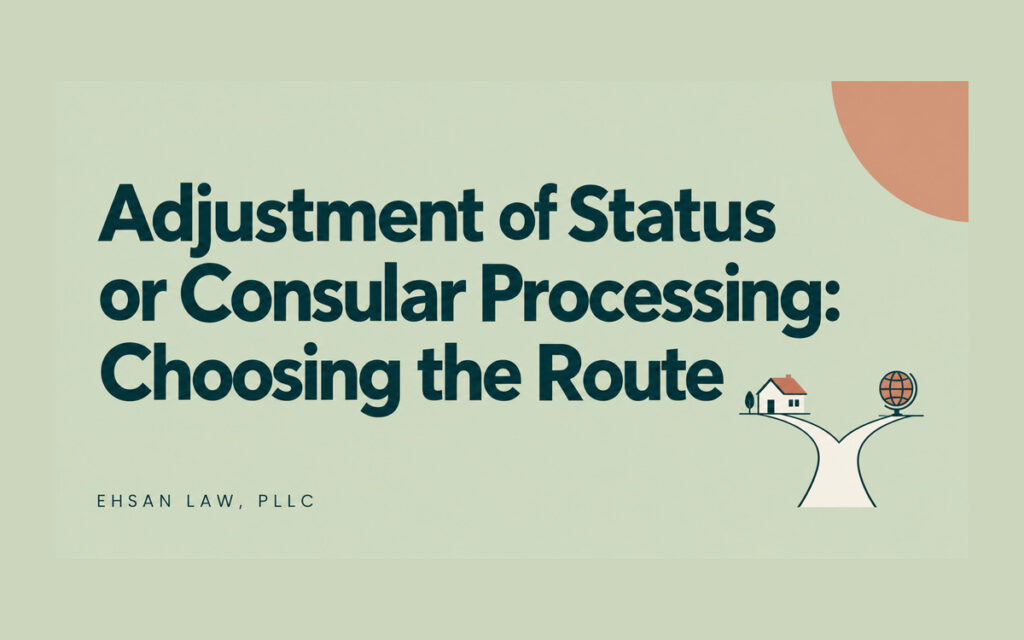
Adjustment of status is a process for eligible applicants inside the United States. Consular processing involves applying for an immigrant visa abroad. The appropriate route depends on eligibility, immigration history, visa availability, and the risks of leaving the country.
A route comparison should answer these questions
- Can this applicant legally use the proposed route under the applicable category?
- Is a visa number available when required?
- Would departure trigger or expose an inadmissibility problem?
- What work, travel, and family-separation consequences arise while the process is pending?
Relevant guidance: USCIS adjustment of status overview.
Establish the legal route before comparing convenience
Begin with the petitioner's status and family relationship. Then review the applicant's admission or parole history, current status, prior violations, and any removal proceedings. Different immigrant categories have different rules and exceptions.
Do not assume that being physically present in the United States makes adjustment available. Likewise, do not assume that an approved petition makes departure safe. Unlawful presence, prior removal, fraud concerns, and other issues can affect the consequences of travel.
Compare the practical steps
For adjustment, evaluate filing eligibility and the separate rules governing work and travel documents. For consular processing, consider civil documents, financial sponsorship, the interview post, and any need to reside lawfully in another country while waiting.
Compare the entire process rather than one advertised processing time. Include travel costs, family separation, employment interruption, and the ability to respond to additional document requests. Processing estimates can change and do not establish a guaranteed completion date.
Review changes before acting
Marriage, naturalization of a petitioner, a status expiration, or a new criminal issue can alter the analysis. Tell counsel before buying tickets or submitting a different form. A prior recommendation should be revisited if the underlying facts change.
Prepare passports, I-94 records, prior petitions, status documents, court papers, and a complete travel timeline. Ask for an explanation of why the proposed route is available and what must be resolved before the next step. The right choice is the legally supportable process for the actual case.
Frequently asked questions
Is one route always faster?
No. Category, agency workload, visa availability, consular conditions, and individual issues affect timing.
Can I leave while an I-485 is pending?
Travel can affect a pending application and reentry. Obtain case-specific advice before departure.
Related legal services
Learn about Family Immigration.
Discuss your next step with Ehsan Law
Call 206-234-6883 or request an immigration intake. Initial intake is for screening; any paid attorney consultation is explained before it begins. If you have an urgent notice or deadline, identify it when contacting us.
Sources and further reading
The information on this website is for general informational purposes only and is not legal advice. Viewing this website, submitting a form, calling our office, or sending us information does not create an attorney-client relationship with Ehsan Law, PLLC. An attorney-client relationship is created only after Ehsan Law, PLLC agrees to represent you and both sides sign a written agreement. Past results do not guarantee future outcomes. Every case depends on its own facts, evidence, deadlines, and applicable law.